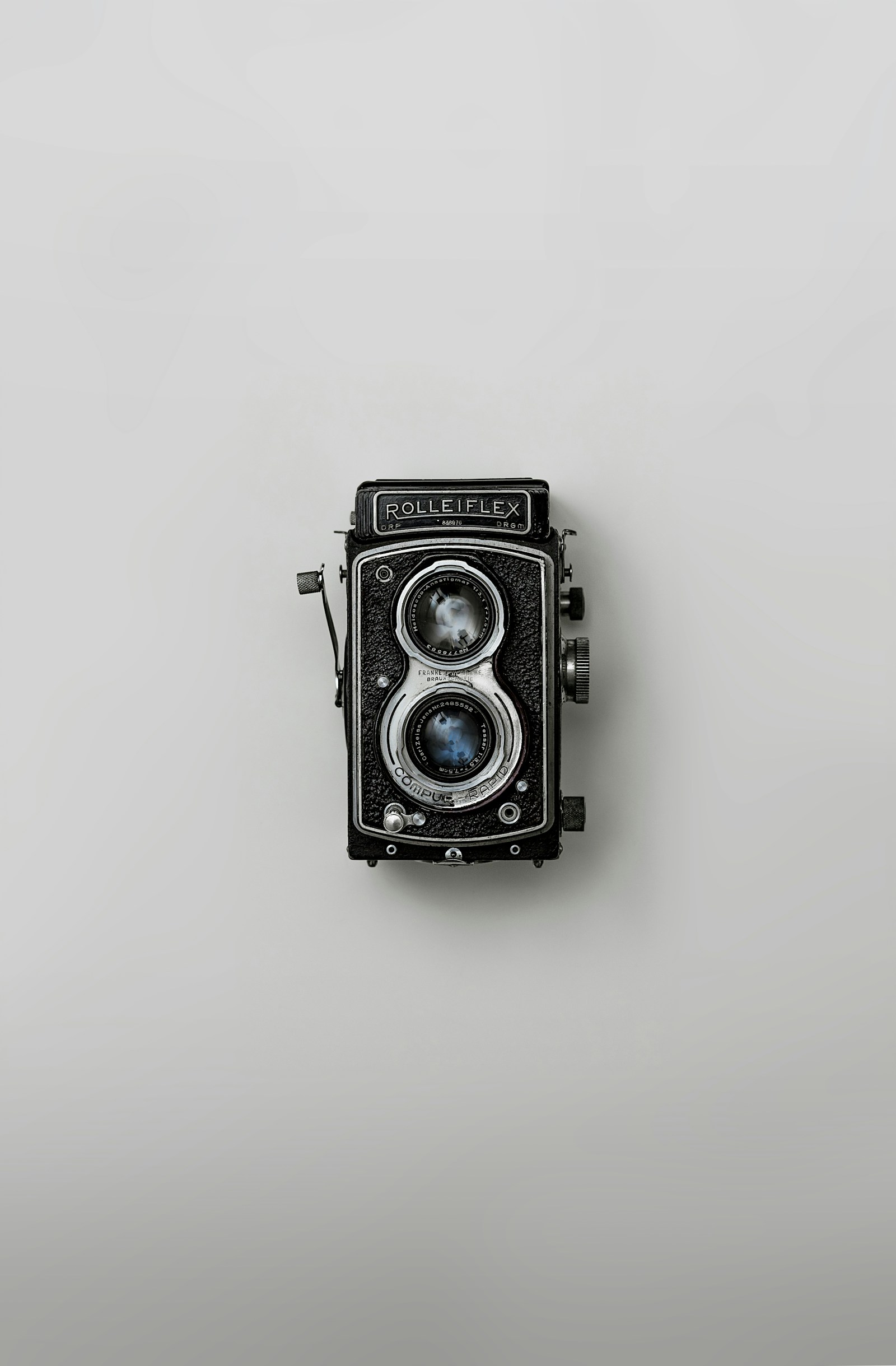
I think Tri-X is the most overrated film in the history of photography. It's magnificent, yes. But its reputation has more to do with the photographers who used it than with any inherent superiority over HP5 or Neopan 400. Robert Frank shot The Americans on Tri-X, and Winogrand burned through thousands of rolls of it. Tri-X's legend was built by those images. HP5's legend was built by the prints themselves.
I shot HP5 almost exclusively from 1994 to 2008, loading it into a battered Leica M6 that I carried from Saint-Cloud to Barcelona and eventually to Marseille. When I started travelling seriously in 1998, I switched briefly to Tri-X because it was cheaper in bulk. I came back to HP5 within a year. Tri-X felt like it was flattering me. HP5 felt like it was telling me the truth.
That said, every one of these films has a distinct personality, and understanding those personalities helps you make better decisions about digital emulation. Here are the five stocks that matter most, the developers that bring out their best qualities, and how I'd approach each one for different subjects.
Kodak Tri-X 400

Introduced in 1954, Tri-X became the default for photojournalism and street photography for half a century. Frank's The Americans was shot on Tri-X. So was Koudelka's Gypsies. Don McCullin's Vietnam and Northern Ireland work. Mary Ellen Mark's ward 81 series. Larry Towell's coverage of the Palestinian territories. The film has a warmth in the midtones, a beautiful grain structure that adds texture without obscuring detail, and almost supernatural latitude. You can overexpose it two stops, underexpose it three, and still get a printable negative.
The latitude is what made it the journalist's film. Working fast in unpredictable light, you couldn't always meter carefully. Tri-X forgave. I remember shooting a street festival in Belleville in 1996, running through the crowds with the M6, guessing exposures because there was no time to meter. I bracketed nothing. Every frame on that roll printed. Not every frame was good, but every frame was printable. Try that with T-Max 100 and you'll throw half the roll away.
Push it to 1600 and it becomes raw and visceral. The grain opens up, the midtones compress, and you get that gritty, high-energy look that defined 1970s street photography. At 800, it finds its sweet spot for available-light work: enough speed for dim interiors, grain that's visible but controlled, and rich shadows that hold detail without going muddy.
Developer Pairings for Tri-X
D-76 (stock) is the classic combination. Balanced grain, full tonality, no surprises. This is the baseline. If someone says "Tri-X look," they probably mean Tri-X in D-76 at box speed. The grain is moderate, the tonal curve is long and smooth, and the results are consistently printable. I used this combination for ten years before trying anything else.
HC-110 Dilution B gives slightly sharper results with a touch more contrast than D-76. The grain is marginally more pronounced but the edge definition is noticeably better. I prefer HC-110 for street work where I want the images to pop. It's also more economical because HC-110 is a liquid concentrate with a long shelf life, while D-76 is a powder you mix fresh.
Rodinal at 1+50 pushes the acutance and grain into visible, characterful territory. Stand development in Rodinal (1+100, one hour, minimal agitation) produces beautiful compensating effects: the highlights compress while the shadows open up, taming extreme contrast ranges. I've used this for high-contrast architectural subjects where I wanted grain as a visible texture. The results are distinctly different from D-76. More aggressive. More graphic.
Diafine is the push processor's secret weapon. A two-bath developer that effectively rates Tri-X at EI 1200-1600 with remarkably controlled grain. The results aren't as clean as Microphen but the process is dead simple: three minutes in Bath A, three minutes in Bath B, fix, wash, done. I kept a set of Diafine baths in my darkroom near Paris for years. They lasted months.

Ilford HP5 Plus 400
HP5 is slightly cooler than Tri-X, with marginally finer grain at the same speed. It has what I'd call a British restraint: a cool neutrality, almost clinical precision. Where Tri-X flatters, HP5 reports. The curve is a touch punchier, the midtones a touch richer. The blacks are deeper. Hold a Tri-X print and an HP5 print side by side under a loupe and you'll see it: Tri-X has a warmth in the grain clumps, a softness. HP5's grain is tighter, more even, slightly mechanical in the best sense.
I shot HP5 for fourteen years. It was the film I learned on, the film I exhibited with, and the film I still reach for when I load a roll of 120 into the Hasselblad. The first print I ever sold was an HP5 negative of a courtyard in the Marais, Paris, developed in ID-11. The buyer was a Belgian collector who asked what film I'd used. When I said HP5 he nodded like I'd given the correct answer to a test.
Developer Pairings for HP5
ID-11 (stock) is the natural partner. ID-11 is Ilford's version of D-76, and it gives HP5 a full, balanced tonal range with grain that's slightly finer than Tri-X in D-76. This is my standard combination. I can develop it in my sleep. The negatives scan beautifully and print on every paper grade without struggle.
Microphen is the push developer of choice. HP5 at 1600 in Microphen is stunning: the grain stays controlled, the shadow detail survives, and the tonal range compresses gracefully rather than collapsing. I shot an entire winter project in Paris at EI 1600 in Microphen, working in bars and cafes where the light was terrible. The negatives had a richness I wouldn't have expected from a two-stop push.
Perceptol goes the other direction, giving you the finest possible grain at the cost of about one stop of effective speed. HP5 in Perceptol at EI 200 produces remarkably fine-grained negatives with a smooth, almost creamy tonal quality. I use this when I want HP5's character but I'm shooting in good light and can afford the speed loss.
The Tri-X vs. HP5 debate has no resolution because the choice is temperamental, not technical. If you prefer jazz, shoot Tri-X. If you prefer chamber music, shoot HP5. Both are honest. HP5 is just a bit more formal about it.
Ilford Delta 400

Delta 400 uses Ilford's Core-Shell crystal technology, which gives it finer grain than HP5 at the same speed, with a smoother tonal curve. It's a modern film that looks modern: clean, precise, with excellent edge definition. It doesn't have HP5's character or Tri-X's warmth. What it has is accuracy.
For architectural work or any subject where grain should disappear and tones should separate cleanly, Delta 400 is the better choice. I switched to Delta 400 for a project on modernist housing blocks in Brno in 2015. The subject demanded precision. The concrete textures needed to be rendered without grain interfering, and the geometric lines needed sharp edge definition. HP5 would have added character I didn't want. Delta 400 stepped back and showed me the building.
Developer Pairings for Delta 400
Xtol (1+1) delivers the finest grain possible from this emulsion. In Xtol, Delta 400 is remarkably fine-grained for a 400-speed film, approaching the look of a 100-speed conventional grain emulsion. If I'm shooting Delta 400, I'm shooting it in Xtol. The combination is so clean that enlargements to 50x60cm from 35mm show almost no visible grain structure.
DD-X is Ilford's matched developer, designed specifically for the Delta range. It gives slightly more acutance than Xtol with a small grain penalty. I use DD-X when I want a bit more bite in the image. Good for overcast days when the light is flat and I need the negatives to have some edge.
Rodinal is an unusual choice for Delta 400 but I've used it for effect. The high-acutance developer interacts strangely with the tabular grain crystals, producing a look that's sharp and grainy in a way that doesn't quite resemble any traditional emulsion. An acquired taste. I printed a few of these at a show in Bratislava and half the viewers guessed the film wrong.
Kodak T-Max 100
Where Tri-X is jazz, T-Max 100 is a string quartet. Kodak's T-grain technology (introduced 1986) uses flat, uniform tabular crystals that capture more light per unit of silver, producing extraordinarily fine grain with surgical sharpness. Ansel Adams switched to T-Max near the end of his life and praised it as the finest-grained film he'd ever used. The tonality is long and smooth, the grain virtually invisible in medium format.
T-Max 100 rewards careful exposure and punishes carelessness. The latitude is narrower than Tri-X, maybe a stop and a half in either direction before things get ugly. Overexpose and the highlights block up fast. Underexpose and the shadows go thin and grainy, losing the fine-grain advantage that's the whole point. I meter T-Max 100 with a handheld Sekonic and I bracket important frames. You can't be casual with this film.
I used T-Max 100 in a Mamiya RB67 for a landscape project in Patagonia in 2003. The combination of 6x7 negative size and T-Max's fine grain gave me negatives that could enlarge to mural scale with no visible grain structure at all. Printed at 100x120cm on Ilford Multigrade FB, those prints had a tonal smoothness that still surprises me when I look at them. The Zone VI through Zone VIII transitions in the cloud formations were seamless.
Developer Pairings for T-Max 100
Xtol (stock or 1+1) is the reference combination for absolute finest grain. Xtol's ascorbic acid formula works particularly well with T-grain emulsions, producing results that are arguably the finest grain possible from any silver halide film. This is the combination for large prints, for work where the viewer will be close, for anything that demands technical perfection.
D-76 (1+1) gives a slight bump in acutance compared to Xtol, with a small grain penalty. I use this when I want the T-Max tonality but with a bit more edge sharpness for subjects like tree bark or stone texture.
T-Max Developer (TMX) is Kodak's matched developer. Slightly finer grain than D-76, slightly less acutance than Xtol. A middle ground that works well when you want consistency and don't feel like optimizing. I used TMX for years before switching to Xtol, and the results were always reliable.
Fuji Neopan 400
The underappreciated third option in the 400-speed race. Neopan 400 had a character distinct from both Tri-X and HP5: sharper, with Fuji's trademark micro-contrast that created an almost three-dimensional sense of depth. The grain was tight and well-behaved, the tonal range generous. When you looked at a Neopan 400 print, you felt like you could reach into it. The midtone separation was exceptional.
I used Neopan 400 for about two years, from 2004 to 2006, when a friend in Barcelona turned me onto it. He was a street photographer who'd abandoned Tri-X for Neopan and wouldn't shut up about it. I tried a brick of it, developed in D-76, and immediately understood. The tonality was different from both Tri-X and HP5. Cooler than Tri-X but less clinical than HP5. The micro-contrast was the thing. Details had a pop, an edge definition that neither of the other 400-speed stocks quite matched.
Neopan 400 was discontinued in 2014, which is a genuine loss to photography. You can still find expired stock on eBay at ridiculous prices, but expired Neopan tends to fog in the shadows. I bought a last brick from a shop in Tokyo in 2013, shot it over the following year, and kept the empty canisters in a drawer like relics.

Neopan 100 Acros, its slower sibling (discontinued 2018, reintroduced as Acros II in 2019), is widely considered the finest 100-speed B&W film ever manufactured. A luminous, silvery emulsion with a slight cool bias and grain so fine it disappears in medium format. Acros also has exceptional reciprocity characteristics, making it the best B&W film for long exposures. Where other films require significant compensation beyond a few seconds, Acros holds its speed remarkably well out to two minutes. Night photographers love it for this reason. I shot it on the Île Saint-Louis at midnight, four-minute exposures of the Pont Neuf, and the tonal quality was pristine.
The Developer Variable
The same film in different developers produces dramatically different results. This is the hidden dimension of analog photography that gets lost in the "which film is best" arguments. The film is half the equation. The developer is the other half. I've seen Tri-X in Rodinal that looked nothing like Tri-X in D-76. Same film, same exposure, same scene, different developer, completely different image character.
D-76 / ID-11 is the standard: balanced grain, full tonality, no surprises. If you're testing a new film, start here. It's the control in the experiment. Every other developer is a variation from this baseline.
Rodinal at high dilution (1+50 or 1+100 for stand development) pushes grain and acutance hard, producing images with visible texture and strong edge contrast. Rodinal has been manufactured since 1891 and the formula hasn't changed. It's a one-shot developer, meaning you mix it fresh each time and discard after use. The stand development technique (fill the tank, agitate gently for 30 seconds, leave it alone for one hour) produces a compensating effect that tames extreme contrast. I use Rodinal stand development for tricky lighting situations where the scene contrast exceeds the film's comfortable range.
Xtol gives the finest grain possible with a slight speed boost, roughly a third of a stop. Kodak's last great developer innovation. It's an ascorbic acid/phenidone formula that's particularly good with T-grain and Core-Shell emulsions. The downside: it has a reputation for dying suddenly without warning. Mix it fresh, use it within a few months, and test it before committing important negatives.
Pyro developers (PMK Pyro, Pyrocat-HD) produce stained negatives with extraordinary highlight detail and a compensating effect that tames extreme contrast. The stain acts as a proportional mask that increases printing contrast in thin shadow areas while restraining dense highlights. I've used Pyrocat-HD with HP5 for landscape work where the dynamic range exceeded seven or eight stops. The results were remarkable: negatives that printed on grade 2 paper despite having been exposed in conditions that would normally require grade 0 or heavy dodging.
Developer Shelf Life: D-76 (working solution): 1-2 months in a full, sealed bottle. HC-110 (concentrate): 2+ years. Rodinal (concentrate): practically indefinite, some claim decades. Xtol (working solution): 2-3 months, but test frequently as it can fail without visible signs. Pyrocat-HD (stock solutions): 6-12 months stored separately in brown glass.
Choosing Film for Different Subjects
Film choice is partly rational, partly intuitive. Here's how I think about matching film to subject, based on thirty years of making these decisions.
Street photography and photojournalism: Tri-X at 400 or pushed to 800 in D-76 or HC-110. The latitude forgives sloppy metering, the grain adds energy, and the warm midtones flatter human subjects. Frank, Winogrand, and Meyerowitz all chose it for these reasons. If you prefer a cooler, tighter rendering, HP5 in ID-11 is the alternative. I switched between them depending on my mood and the city. Tri-X for Marseille. HP5 for Paris.
Landscape: T-Max 100 or Acros in medium or large format, developed in Xtol. You want the finest grain and the longest tonal range for subjects where the viewer will stand close to a large print. For stormy, dramatic landscapes where grain is part of the atmosphere, HP5 or Tri-X at box speed in a 35mm body works well. Some of my favourite landscape images were shot on HP5 in a Leica, not on T-Max in a 4x5.
Portraiture: HP5 in ID-11 at box speed for a neutral, honest rendering. Tri-X for something warmer and more flattering. Delta 400 if you want the face to be sharp and the grain invisible. For studio portraits with controlled lighting, T-Max 100 in medium format gives you skin texture resolution that digital cameras struggle to match at equivalent enlargement sizes.
Architecture: Delta 400 in Xtol for modern buildings where clean lines and fine grain matter. T-Max 100 for anything you're going to print large. For industrial architecture or ruins where you want grit and texture, Tri-X in Rodinal at 1+50 is magnificent. The grain becomes concrete dust.
Night and low light: HP5 pushed to 1600 in Microphen. Or Tri-X pushed to 1600 in Diafine. Delta 3200 if you need real speed, but accept that the grain will be prominent. For long exposures on a tripod, Acros II holds its reciprocity characteristics better than any competing film.
Pick a film and a developer. Stick with them for a year. Learn what that combination does in every light, at every exposure. Then, and only then, change one variable. As Josef Koudelka said, "What matters most to me is to take photographs; to continue taking them and not to repeat myself. To go further, to go as far as I can." The same applies to film and developer choices. You learn by repetition, not by sampling.