The Science Inside the RAW Pipeline
From photons to pixels: CIE colorimetry, the Planckian locus, demosaicing algorithms, Bayer denoising, and every stage of the RAW pipeline explained from first principles.
Essays on black and white photography — tonal craft, printing technique, the science of film, and the discipline of the fine print.
From photons to pixels: CIE colorimetry, the Planckian locus, demosaicing algorithms, Bayer denoising, and every stage of the RAW pipeline explained from first principles.

Why RAW files matter for B&W, how white balance changes your tonal palette before conversion, the channel mixer as your digital color filter.
IEEE 754 half-float textures, scene-referred processing, and ACES Filmic tone mapping — the pipeline architecture explained.
True 11-zone control, 5-channel spectral mixing modelled on real film emulsions, and real-time zone map visualization.
Ansel Adams' Zone System remains the most rigorous framework for tonal control in digital black and white workflows.
A complete guide to legendary B&W film stocks — Kodak Tri-X, Ilford HP5, Fuji Neopan and more.
Choosing paper for a B&W print changes everything: D-max, texture, tonal warmth.
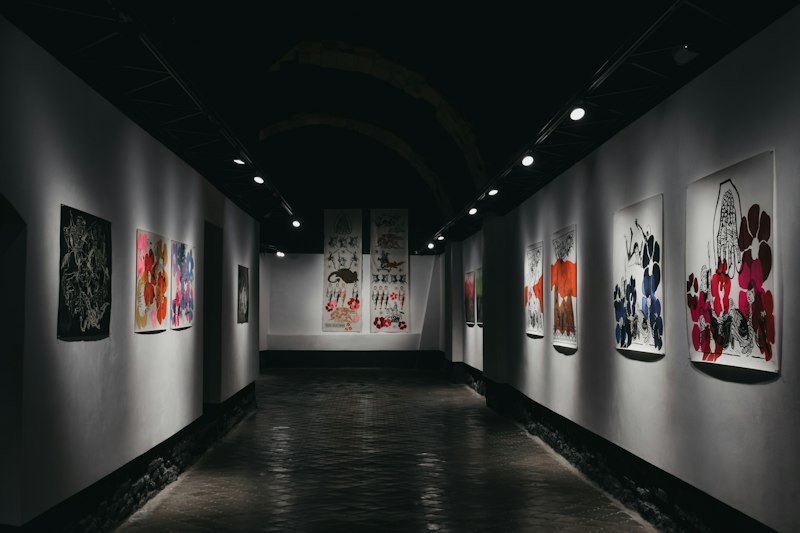
Practical advice on organizing a photography show: venue, budget, timeline, hanging, and lighting.
Baryta, cotton rag, and alpha cellulose papers for B&W fine art printing.
Training your eye to see in black and white — pre-visualize tonal relationships and compose without chromatic contrast.
Museum-grade framing, conservation matting, glazing, and gallery lighting for B&W photography.
From selenium to sepia, gold to split toning — a complete guide to darkroom toning processes.
How to see and use light specifically for B&W — directionality, shadow form, contrast ratio.
Grain gives a B&W print its texture and soul. From Tri-X to Delta 3200 — film stock character and developer influence.
Paper choice, ICC profiles, printer calibration, and the lessons that separate screen from print.